Is it safe to keep blockchain a closed application?

My earlier blogs detailed out Dubai’s interest in Blockchain technology, the three pillars of blockchain implementation, and an understanding of blockchain model – today we intend to dig deeper into the types of blockchain.

The reach of Blockchain will go far beyond than what it was intended for. While banking is only the beginning, Blockchain will slowly introduce itself in the sectors like cybersecurity, healthcare, automobile, education, sports management and what not!

Blockchain establishes trust, accountability, and transparency, while streamlining business processes. It is a peer-to-peer distributed ledger technology for a new age transaction application.

So what are Open Blockchain?

According to the tech giant IBM, “Open Blockchain is a ledger of digital events, called transactions, shared among different participants, each having a stake in the system. The ledger can only be updated by consensus of the participants, and, once recorded, information can never be altered. Each recorded event is cryptographically verifiable with proof of agreement from the participants.”

Examples range from Bitcoins to Litecoins.

And what are Closed Blockchain?

Exactly opposite as the name suggests, a Closed Blockchain is a private network that maintains a shared record of transactions. The network is accessible only to those who have permission and transactions can be edited by administrators. Some also refer Closed Blockchain as Database.

Examples: Hyperledger, Ripple, Eris

The whole point of distributed ledger having maximum integrity is lost.

One of the core design principles behind a blockchain is that it’s immutable. However since a Closed Blockchain is edited by an administrator, it will be difficult to keep a track on the central actors since they rely on trust. Because of all these, it is going to be extremely critical on who you give access to.

But not even an Open Blockchain is absolute.

Having Blockchain Open (like Bitcoins) means you trust no human but trust computer algorithms and machine learning. So basically you believe in no-one which makes everyone trustworthy. Just like the internet. Where we need only basic permissions (like Logging in) to communicate or use Google for search.

The most striking thing about having Blockchain as an Open source is programmers can build programs and applications using them. Just like IFTTT (IF This Then That). They are a free web-based service that people use to create chains of simple conditional statements, called applets.

Andreas M. Antonopoulos, one of the most respected Bitcoin expert terms it as ‘Innovation without Permission’. In one of the Bitcoin meet-up group Milwaukee, WI Feb 2014, Mr Andreas said, “When was the last time you saw someone build a bank out of their garage, and disrupt the financial services system to its core? Never. Why? Because they’re not given access, because access has to be trusted. On bitcoin anyone can create an application, and can innovate, and create new financial instruments. And that is pretty radical.”

This debate of having Open Blockchain or Closed Blockchain is taking rounds in various start-ups and educational institutions lately. Trescon is hosting global Blockchain gurus under one roof on 24 – 25 October 2017 in Dubai, UAE at the  World Blockchain Summit. It features Blockchain experts who are nothing less than the foundation for new value creation in this emerging field.

For more information on the Summit, get in touch with Vijay Walter, Senior Production Manager on speaking@tresconglobal.com.


22.5 billion estimated IoT devices by 2020; let us see what are the drivers for such large-scale adoption

From US$1.3 billion last year to US$9 billion by 2020 – India’s IoT market size is expected to multiply about seven times, whirling out to be the most promising industries.

In 1999, British technologist Kevin Ashton came up with the term Internet of Things (IoT) to define a network that not only connects people, but also the objects around them.

In just over 17 years, this concept has witnessed a global acceptance. The number of devices connected with the internet is expected to reach the gigantic figure of 22.5 billion across the globe, impacting close to 6% to the global economy, declares a report.

In this blog, we look forward to chalk down the enablers and the drivers of adoption; apart from Indian Government’s initiatives such as investing US$1 billion in creating 100 smart cities and the ‘Digital India’.

As far as India is concerned, I see four main drivers of IoT adoption:

The Mobile Revolution

It is not just the most obvious term but the most significant as well. There were several challenges for IoT which became the impetus in last few years:

These are:

  1. High cost of devices and limited availability of smart devices
  2. Lack of basic infrastructure from payments to internet connectivity in tier 2 & 3 cities of non-metropolitan state

These things have changed so much that it is now not surprising to see villagers using a smart phone and watching videos on Facebook.

Competition Shaping IoT Market Dynamics

This has helped companies selling more and selling better quality goods that are integrated with the internet. Companies which are customer-centric will have unlimited insights into customer needs, arising from information sharing across/between channels.

Increasing Quality of Life

With the increase in quality of life, Indians have started purchasing smart TVs, smart homes, smart wearables and smart cars which constitutes majorly to the adoption of IoT.

The amazing amalgamation of IoT, AI, Data Analytics & Big Data

Few years back, the data was separated in bits and pieces giving no actual insight.  What this amalgamation has done is it has given Marketers an amazing consistency between the data received through digital channels.

In the Indian perspective, the subject IoT has led to the opening of several questions, debates and opportunities. Looking at this opportunity, Trescon, a Bengaluru based global business events and consulting firm is hosting global IT thinkers in the Sixth Edition Big CIO Show. One of the most important discussions is about how IoT is providing a tectonic change in the way applications are built today and how they can change the face of distributed computing once and for all.

Axel Angeli, Digital Transformation Evangelist from Germany is presenting a keynote on ‘Industrial Revolution 4.0 – Going Digital’ at the #BigCIOShow.
He says, “The Internet of Things promises to connect every electronic device with ease to the internet. Yet today nearly every human has the potential to access any other computer through his smart phone.”

“The consequences are ever faster change of the human world. And since we are only at the beginning of the revolution we will see an affluence of new professions, technology and challenges that will simultaneously deprecate old habits of the social life. What will we expect in the coming decade in terms of Internet of Things, Autonomous and cyber-physical systems, cyber-security and how do we handle the ultra-large big data lakes? Let us start a fast-paced journey into the land behind the mirrors to sharpen the senses what the future of Digital Transformation will promise and what participation it demands,” explained Axel Angeli.


#BigCIOShow, in its 6th year has been a platform for CIOs to improve the visibility of their products or services by giving them a global exposure. It is a proven stage to stay up-to-date on all new concepts, technologies, smart devices, computer protocols, security, innovation, and everything pertaining to technology.

Apart from these, the 2-day show also has topics like Blockchain, AI, Cyber Security, Digital Transformation that will be discussed by CIOs in great detail.

BLOCKCHAIN IS NOT A DESTINATION, IT IS A JOURNEY

Since the arrival of Bitcoin in 2009, blockchain has been its backbone. There has been much written about blockchain that it is not ready and stable to rely upon. The reasons are also well thought out – the need for training people on blockchain, cost of investment in software, time to make all these a reality are amongst the usual excuses apart from ‘not wanting to change’.

There is also a view that until we understand how that model will look and work, it is difficult to develop any kind of blockchain promises that reflects industry practice. This is why blockchain is generally lagging behind.

But change is coming. At least in some parts of the world. Experts like Richard Kastelein, Founder Blockchain News, Cryptoassets Design Group & Blockchain Partners, Netherlands, believes, “In 2017, blockchain is still in the proof of concept phase. From my perspective, 2018 is when we will see initial adoption in some sectors. By 2020, wide-spread adoption will be the norm”

People often say they want blockchain without fully understanding what they actually want from blockchain. This is something which needs to be discussed with clients early on to ensure the contracts, protocols and the technology adoption reflect their organization’s objectives.

So where do blockchain technology go from here?

We asked the expert Richard Kastelein about this. He said, “The issues surrounding any implementation of blockchain is specifically related to the network effect – how many and who are using it. It becomes a domino adoption process once major players adopt it. Otherwise, it starts to exclude those players who have not adopted the technology. As more and more countries and companies move to the blockchain, the more it REQUIRES others to adopt the technology.

We are already in the information age, adoption of technology is pretty much accepted as inevitable.

We also asked Richard what smart advice would he give to start-ups working on blockchain, to that, he said, “Forget about coming up with the latest wallet or client. 99% of those firms will fail. Focus on providing useful skills and development capabilities to large sectors. There are few successful race car designers, however, there are many successful firms that supply the engines, the tires, the frames, the safety features that make up a beautiful race car.”

Read Richard’s full interview here

Richard Kastelein is one of the many speakers alongside Jack Shaw, Executive Director, American Blockchain Council; Jane Zhang, Founder and CEO, Shellpay, USA; Tim Lea, CEO & Founder, Veredictum.io, Australia and many more at World Blockchain Summit.

This summit plans to host tech and blockchain giants to discuss ways how businesses should not only adapt blockchain technology in their budget; but also change their mind-set about it.

Trescon is hosting this event in Dubai which also happens to be one of the only place which turned blockchain concepts into reality. World Blockchain Summit is scheduled at The Address Hotel, Dubai on 24-25 October 2017.

For speaking, sponsorship or attending inquiries, visit https://www.tresconglobal.com/blockchain/.

TRACING INDIA’S TECH REVOLUTION – FROM LABOUR ARBITRAGE TO A TALENT POWERHOUSE

The next 5 years in technology will transform India much more than what cell phones & smartphones did in last 15 years.

The impact of technology on Indian as well as Global economy has been humongous and there is an un-denying fact that this revolution has made us all live in an IT obsessed world. It has enabled people to live a happy life while in turn giving back some of the best minds to the society. Yes, I’m also talking about Elon Musk here.

When it comes to exploring and experimenting with emerging technology, the Indian IT market has a mix of companies that are intrepid while other companies need a motivational push. Companies like PayTM in e-commerce and banking, Nestaway in real estate, Practo in medical services have disrupted because they did not wait for the innovation to happen.

These companies have adapted the following system:

At first, they started with finding digital technologies that disrupt; then they expanded well beyond that. The main focus has been on developing the core functions enabled by technology. All of these and more is to make it a piece of cake for the end-users. The more time & cost efficient the business is, the more will be the adaptation. And India has, without question, made the largest technological breakthrough making it the most attractive destinations for investors throughout the world.

From Aadhar Card Act to UPI to BFSI disruption in last 10-15 years, let us see what future technology holds for India in next 5 years.

The rise and the rise of blockchain – Blockchain has finally paved its way in 2017 as one of the incredibly disruptive entity rather than just being the backbone for Bitcoin since 2008. Blockchain is a decentralised system that can be a faster, cheaper and a safer way for global transactions.

There are few banks like ICICI who have already invested and done a blockchain transaction where as Kotak Mahindra Bank are theoretically convinced of the advantages of this upcoming technology.

India has also seen some early adopter of Bitcoins and while we are only digesting it, you will not be surprised when few sectors like real estate, transportation (where transactions are huge) will agree to Bitcoins as an accepted transaction soon.

IoT coupled with Big Data and Analytics will change the business models of many sectors – These technologies have a staggering impact on various industries that can change the face of any nation. Using sensors and connectivity, IoT will help in building advanced asset utilization system which can easily locate and maintain the machineries, tools and equipments.

What is evident as well as exciting is these IoT-enabled devices have become an integral part of our life. And IoT security, which was earlier ignored has been a major business concern lately.

Many still feel India has been laidback in building the Facebook or WhatsApp of India. I support the statement to an extent. What I think is the breakthroughs will happen only once the mental shift happens. Businesses that still stick to ‘let us do it the way it happens’ will face fierce competition in next few years, and they might as well get thrown out of the market. It is not the fancy leapfrog jump that these businesses will have to take; but just an open mind to be a front runner in creating the trends.

Trescon is exploring ways how businesses can be benefitted by the upcoming technology trends by hosting some of the best Indian and international CIOs on 14-15 June 2017 at JW Marriot in Mumbai. In this Sixth Edition #BigCIOShow, Trescon’s goal is to empower businesses that can discover innovative ways for adapting digital transformation which suits their businesses the best.

Experts of IoT, Big Data and Blockchain will have a lightning talk on the topics mentioned below:

  • Exploring where IoT is driving real results, to real people, in real businesses
  • How and where is IoT enabling smarter business operations and smart decision making?
  • In what ways, can IoT enable innovation and drive real business transformation and remake your industry?
  • Developing new business models and propositions to engage with the customer or consumer and collaborate with key verticals,
  • Impact of IoT across the value chain.

With this show in Mumbai, Trescon plans to re-envision business models & embrace a way of using technology that bridge people, data, and processes ultimately bring together and empowering businesses with exciting possibilities.

For more information about the show, participating speakers and agenda, visit bigcioshow.com. To book tickets, visit Big CIO Tickets. Explore Sponsorship opportunities at Sponsor Big CIO Show

WannaCry: CYBER SECURITY HAS BECOME BUSINESS RISK RATHER THAN TECHNOLOGY ISSUE.

A friend of mine from Rajkot told me that 2 of his friends, standalone photographers were attacked by WannaCry and they were asked a ransom of $300 within 24 hours post which this will increase to $500 failing which all the data will be lost.

A well-resourced, determined individual can get into any IT eco-system he wants; forcing us take a side in the decade-long debate – ‘Is cyber security a myth?’

Cyber attacking has become a game of fun today. Today’s evolved cyber attackers won’t just ask for money, fame or an island – all they want is to prove their supremacy by bullying websites of government or enterprise.

Today, it is very difficult to constantly protect ransomeware against technical, human and threat intelligence. Thus making cyber defence the most critical aspect for Fortune 500 companies to SMEs.

On 15th May 2017, a virus called #WannaCry wreaked global havoc and even after 30 hours of it infecting over 2 lac Windows OS in 150 countries, cybersecurity experts are still finding how it invaded networks in such a large scale.

It is high time for businesses to learn from cases like #WannaCry – Since cyber criminals are becoming extremely intelligent in getting new ways to infiltrate, businesses have to be at least two steps ahead. If not today, then businesses will have to adapt an internal policy to avoid such attacks anytime in future. The simplest of strategy can be to keep everything updated; from operating systems to web browsers to firewall, antivirus software to regulating passwords at indefinite intervals. All this is to make sure there is not even a nanocrack for these ransom malware to enter.

Not only businesses are the targets – Cyber security firm Quick Heal Technologies said 60 per cent of the attempts by the malicious WannaCry ransomware were targeted at enterprises, while 40 per cent were on individual customers adding a total of 48,000 infected devices. Sanjay Katkar, MD Quick Heal Technologies said, “Our observation is that the attack is not focused towards any particular industry but it is widely spread across industries especially those organisations which are online and connected”.

There has been so many breaches in last few years. In February, Bangladesh Bank was attacked where cybercriminals were successful in stealing US$81m. In December last year, Yahoo revealed that a data breach from August 2013 had affected a billion users. In all these instances and more, the impact was catastrophic if not severe. Cybersecurity has become one of the toughest tasks for CIOs, security decision makers/evaluators & security experts.

From data breaches to Distributed Denial of Service (DDoS), businesses are at a higher risk than ever before. The big question at the #BigCIOShow – Are companies as agile as their attackers are?

Trishneet Arora, CEO, TAC Security, aims to deliver a keynote at the Sixth Edition Big CIO Show to be held in JW Marriot in Mumbai on 14-15 June 2017. His business model includes a friendly hacker that helps corporate giants recognise its weaknesses before the fraudulent hackers can use them adversely. Trishneet, a school dropout at the age of 23 secures some of the biggest players in India like RIL, Amul and CBI.

His cyber security startup, TAC Security provides complete vulnerability assessment solutions, which involves the process of identifying, quantifying, and prioritising the vulnerabilities in network infrastructures.

Catch him live at the #BigCIOShow discussing some of the latest cybersecurity insights and trends.

Exploring Digital Solutions for Traditional Problems

The survival of the fittest – The problem with the customers’ expectations is that they keep rising. People want the business to be delivered exactly as they want. If you can’t give a product exactly at the same price in physical store as your online store, they will move away. Possibilities are they might stop buying from the online store as well. The reason is you have inconvenienced them. Today, it is ‘time’ and ‘service’ that matters over ‘price’.

Giving solutions in real-time on platforms like Twitter/Facebook will help because your customer inquiry number will be the absolute last resort. And this is evidently important in this digital era because anyone or possibly everyone is an influencer. As you read this, your competitor has adapted some new way of using technology, changing their business model in a way. Whether you’ve faced this moment or not, it is high time that you disrupt or you get disrupted.

I would recommend the former one and accept this as the new norm of doing the business because this new generation will always find another way but won’t wait. Brands today have to be available wherever their customers want them to.

There are trends that a company can look up to but the way to get it implemented is solely dependent on the CIOs/CTOs of the company. It is not just implementing differently than your competitors, but making it simple and secure enough that makes people stay longer using your products/services.

Trescon is exploring ways how businesses can be benefitted by the upcoming technology trends by hosting some of the best Indian and international CIOs on 14-15 June 2017 at JW Marriot in Mumbai. In this Sixth Edition Big CIO Show, Trescon’s goal is to empower businesses that can discover innovative ways for adapting digital transformation which suits their businesses the best.

Dr Bill Limond, Business Transformation, Program Leader, CIO, CDO, CTO, Consultant, Mentor, Coach, Advisor is one of the many speakers at the the #BigCIOShow. Bill is delivering a keynote on ‘Translating Digital Transformation into Clear Business Value For Organisation’. Highlights of his keynote address include:

  • Articulating the value of digital technologies to your organization’s future
  • Engaging senior management with the right story for your business
  • The importance of establishing KPIs to measure the impact of digital transformation
  • Framing the right narrative for digital transformation

With this show in Mumbai, Trescon plans to re-envision business models & embrace a way of using technology that bridge people, data, and processes ultimately bring together and empowering businesses with exciting possibilities.

For more information about the show, participating speakers and agenda, visit bigcioshow.com. To book tickets, visit Big CIO Tickets. Explore Sponsorship opportunities at Sponsor Big CIO Show

WHY DUBAI WANTS TO ROPE IN BLOCKCHAIN?

This article will give you a head start on the blockchain technology with some latest information on why is Dubai so excited about it.

In the year 1969, we witnessed one of the most disruptive innovations which changed the world for the better; ‘The Internet’. Well now it is not just the only technology that changed our lives upside down, it is followed by ‘blockchain technology’ which, as many believe has the power to change the payments ecosystem globally. Before digging deep into what blockchain is, let us understand its meaning in layman’s language and its connection with Bitcoin.

Is blockchain just a digital ledger system?

Blockchain is a decentralised system that can be a faster, cheaper and a safer way for global transactions. Blockchain is a ledger software code, where ledger simply means keeping a record book of finances. But blockchain is simply not the digitisation of ledger, but promises more to it.

It helps in keeping records of a ledger without the interference of a third party. These parties include businesses that create infrastructure between a payer and banks, businesses that transfer money or submit invoices, etc. Blockchain is also referred to as ‘a way to create trust in the digital age’.

What is the Bitcoin connection?

Blockchain has finally paved its way in 2017 as one of the incredibly disruptive entity rather than just being the backbone for Bitcoin since 2008. For those who know what Bitcoin is or at least have heard of the same, Bitcoin is a new currency that was created in 2009 by an unknown person using the alias Satoshi Nakamoto. Transactions are made with no middle-men, meaning, no banks! There is no need of giving your name and the transaction fee is null.

HOW WILL BLOCKCHAIN MAKE DUBAI THE MOST TECHNOLOGICALLY ADVANCED CITY IN THE WORLD?

The Crown Prince of Dubai, Shaikh Hamdan Bin Mohammad Bin Rashid Al Maktoum cited that the ‘Dubai Future Foundation’ will be tasked with overseeing the strategy to its implementation, while the Smart Dubai executes the directive.

Is blockchain econonomical? Eco-friendly? – When the Crown Prince of Dubai announced implementing blockchain in October 2016 in order to achieve high-degree of efficiency in government departments, he also laid a foundation which is appreciated across the globe. The agenda is to go paperless, cutting almost 100 million paper transactions annually. This will also save millions of hours spent on storing and managing paper. This means the same hours can be re-utilized in something else. Wow!

Shared ledger instead of data, documents and papers. And everything is real-time – What has the financial markets intrigued about blockchain is the potential to offer the same shared ledgers across multiple users to perform financial transactions or back-office functions in a manner that delivers real-time data to all parties involved. The ledger is viewable – and usable – at once by any and all nodes on a distributed network (either private or public).

It brings with it an incredible work-life balance – Implementing blockchain will also give stress-free life to people as it requires a setup to be done only once. After a successful setup, people will never have to worry about transaction receipts and authentication from third party businesses concerned with the transaction.

Mohammad Abdullah Al Gergawi, Vice-Chairman of the Board of Trustees and Managing Director of Dubai Future Foundation, said, “The strategy will result in substantial economic saving that can be reinvested in value-added sectors and will contribute to saving millions of hours wasted in entering data and ensuring their veracity. It will also create new economic fields and businesses as the volume of Blockchain market is expected to hit $300 million over the course of the next five years.”

World Blockchain Summit: A global platform to exchange ideas and showcase solutions

With the developments in blockchain technology as they come, Trescon, a Bangalore based global business events and consulting firm has grabbed all the attention which is about to host the first ‘World Blockchain Summit’ in Dubai on 24-25 October 2017. The primary focus is to identify and prioritise the various service areas in public and private organisations that can benefit from blockchain technologies and educate the market about the transformational potential of blockchain and Distributed Ledger Technologies.

Mr. Mohammed Saleem, CEO, Trescon said, “Blockchain technology in different form has been there for over a decade now. This summit is intended to provide a single high-profile platform to all the stakeholders in this game changing technology. Trescon is proud to organise first ever blockchain summit which is hosting global blockchain gurus and technology players in this space including emerging start-ups, with regional businesses and IT leaders from across key industry verticals”

For more information on the announcement, logon to www.worldblockchainsummit.com or contact krunal@tresconglobal.com, +91 80 3911 3942

Ad-blocking: Discussion of the alternative

What should you do as a brand/publisher? (This is the final part of my second blog. I would request you to read the first part if you haven’t)

Native Advertising –  I would love to have your concentration on these two words because probably they will matter to us the most in the near future. Why am I saying so? Because the west has seen it. And we all learn things from west isn’t it? Let me tell you more about native advertising.

Have you ever heard about this freefall ad by RedBull? If not, I would recommend you to stop reading this and watch it first.

RedBull’s free fall from stratosphere is a decent example of native advertising because it has intrigued people on the web, started conversations (UGC as we call). The best thing I like about Redbull is how they explore an extent to what a brand can go to. The highest free fall ever recorded in the human history. I was totally nonplussed when I saw this in one of my MBA lectures in Symbiosis.

If performing native advertising is getting messy, here are tips which can be lucrative enough for an ad-block user to turn the extension off:

Most Millennials nick pride of their attitude to connect with a brand and believe they don’t evermore fit within stereotypes. However, these tips will help you push their buying decisions in your favor:

  1. Make it piece of cake for millennials to stand in one shoes of your products and services.
  2. Foster heartfelt conversations in your customers and help them share with your public portal.
  3. Address the needs of budget-minded millennials by offering convenient way of shopping and payment tools. They would love to pay via PayTM or Freecharge or even Mobikwik for that matter.
  4. Look for ways to display your company’s values and handling few of the society/civic issues. And win your customers in these efforts.
  5. Invest in the social broadcasting channels where it matters the most. Not every brand can leverage from Facebook/Twitter. Concentrate on platforms where millennials feed in actual discussions that are mutually interesting for them.
  6. Make efficient decisions on innovations that supplies millennials’ needs. SnapChat is the perfect example of these types of business innovations.

Ad blocking is a wake up call for advertising agencies and the media who utilize them. It’s letting them know that buyers are turning out to be more observing and demanding. Yet this could be taken care of as large news media and productions houses adopt more obtrusive advertising approaches including supported articles, backlinks et cetera. After all, it is one of the most exciting cat and mouse race.

That’s all folks.

Why Millennials block ads on Internet?

ad-blockingAd-blocking has been amongst the most discussed topics in 2016 thanks to Apple where users of iOS9 are able to block ads on the gadget level itself. There are ‘n’ number of websites like Google, Facebook, Twitter, YouTube, Quora, Maps, Google Docs, Coursera, and so on that we utilize day by day without spending a single penny. This list doesn’t cover the whole rundown of most well-known websites so now we get a thought that the greater part of the web doesn’t charge users any cash rather they depend on advertisements.

For Millennials (born 1977-1995), internet surfers, Bloggeratis and Twitteratis who’re searching for a peaceful session on the web, the rise of ad blocking extension has been a boon. Be that as it may, this innovation isn’t getting everybody’s thumbs up. While there’s a great deal of unimportant ad content found on the web, the ad blocking extension has turned out to be to a greater extent a peril.

Business Insider

Advertisements are irritating yet that is the best way to get cash.
What happens when we stop each advertisement? Answer is basic, all websites will eventually start charging us for the service they provide just like premium services do for example Netflix, and no free goodies anymore, you just get what you pay for. Now it starts looking more like a strict hostel but once World Wide Web was a friendly dormitory to hangout.

The argument against digital advertising is they have gone a long way past their underlying social connect with readers. The understanding was that users appreciated free content in return for two or three ads. Not all but some advertisers no longer want us to notice a product but want to extract important information from us. If this remains, there has to be a possible solution between advertising publishers and internet users to come to a golden middle.

India Today Before Adblock
India Today webpage before blocking ads. Total number of ads: 17
India Today After Adblock
India Today webpage after using AdBlock.

From somewhere in September 2016 till 16th January 2017, my PC has blocked 187,235 ads to be specific. Why? Because I love to have a clean look on the webpage I’m on. And there are multiple other reasons as well.

Here are few reasons why I support ABP (Ad-block Plus), a software by Google Chrome.

  1. It is 100% legal.
  2. There is no law which states it is unauthorized for users to use ad-blockers.
  3. The consumer makes the final call in what he/she wants to regard from the web and it relies solely onto them.

Since we have talked enough on Ad blocking, let us understand why do Millennials actually block ads on internet.

  1. Many millennials have agreed to the fact that they came to know about the existence of ad-blocking extensions from the web itself. This means selling things to this race has to have a different approach.
  2. Millennials live in a moment and usually make last minute decisions. They do impulse buying more than their parents. Pop ups to them don’t actually matter.
  3. The reason few millennials have installed ad-blockers is solely because of security and privacy concerns. Which even few advertising publishers have accounted as valid.
  4. Some believe the fault actually lies in the way these online ads are placed. If the placement of the ads is taken care of, they may still reconsider turning ad-blockers off.
  5. Many agree that they have a low-opinion of the website/business when they see multiple pop-ups being raised.
  6. The online ads that numerous publications serve up nowadays store client information, pass on viruses, malware and slow down users system.

Ad blocking is a wake-up call for advertising agencies, brands and the media who utilize them. It’s letting them know that buyers are turning out to be all the more observing and requesting. Yet this could reverse as large news media and productions have started deploying more obtrusive advertising approaches including supported articles, backlinks, etcetera. It’s a cat and mouse race.

In my next blog, I will write what you should do if you’re a website owner, an ad publisher or a brand. I have some important data extracted from a survey on millennials. See you around! And do let me know what are the Ad-blocking trends you feel will follow this year. Good bye.

How can technology truly make content the king?

Do you remember the time when you wanted to watch that movie you dreamed about the whole weekend? You rushed to a DVD rental store early from work on a Friday night, spending your time in the traffic just to get that one DVD of the movie. Imagine the grudge you had for that person who snatched it up just before you reached.

You must also remember the late fees that you had to pay for renting those DVDs. And God forbid you plan a long weekend at home watching films and missed the deadline to return them, it would surely cost you a small fortune.

Only people born before 1990 would have witnessed such hurries. Because what the next generation saw was a completely different side of the table. The idea of Netflix came about when Reed Hastings saw a local gym’s business model, ’pay one monthly fee and have unlimited access to the gym’. And thus began the video streaming revolution.

Content marketing is like a new born baby. You have to take the utmost care while the baby is quite young, with maintenance processes like regular oil massages to help your baby’s growth and development. Similarly, content marketing will probably not show results in the initial stage, but once it starts, you may be shocked by the results.

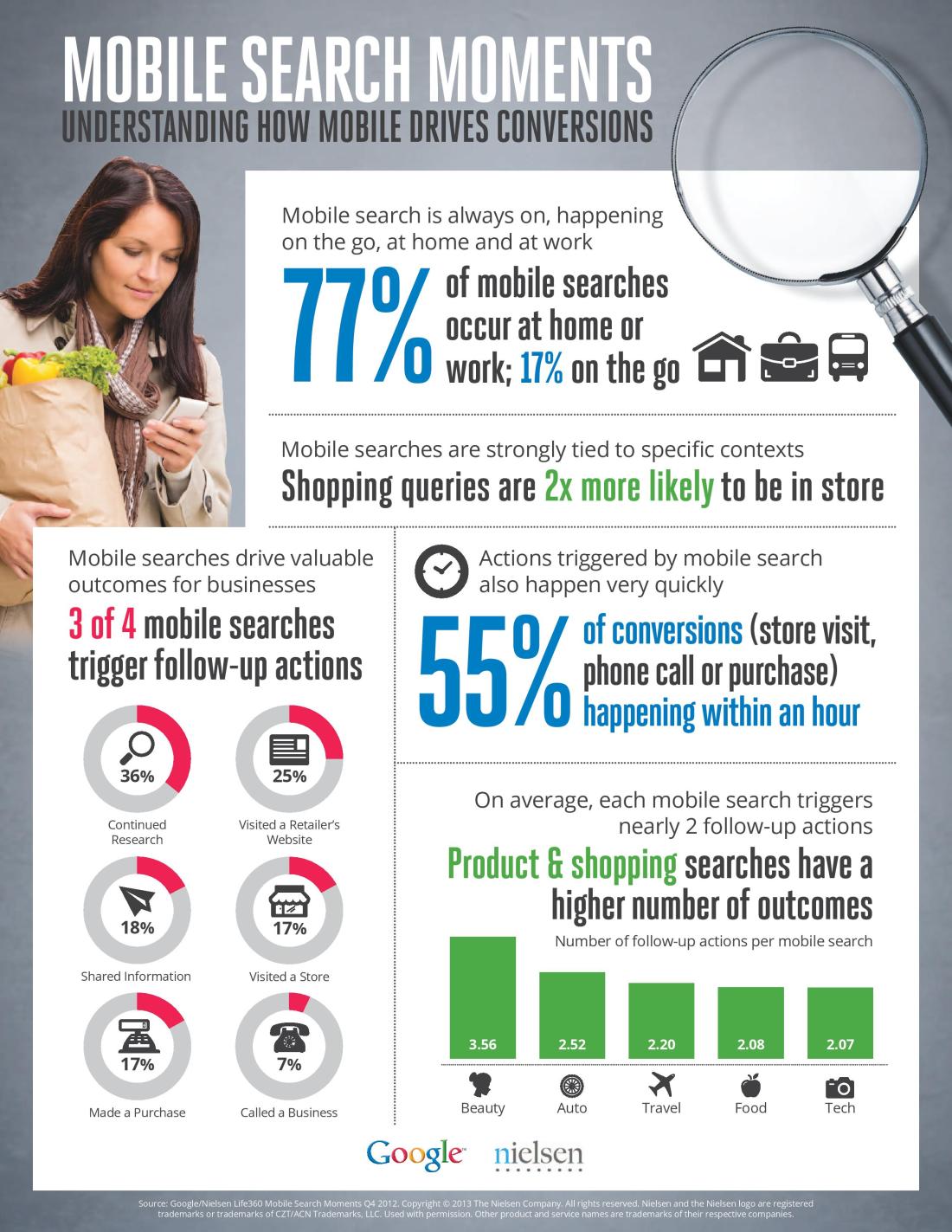
Content Marketing & Advertising are not growing exponentially, they are exploding – According to a 2013 study by Google & Neilsen, of 85% searches on smartphones, 81% are seen to be taking an action. This huge conversion rate is what drives marketers towards mobile advertising. It has already started justifying all the hype that was created over the years.

Understanding How Mobile Drives Conversions - A Study By Google & Nielsen

With technology you can help create content which resonates with your consumersBut before doing that, how do you find the right consumer? Well, most of the time you don’t find a ‘right’ consumer, you create them. Zomato, an online food search and delivery platform has been setting trends by means of technology with content which brings out the foodie you. Zomato’s major part of content comprises of entertainment and higher degree of creativity.

1976976_841118219247595_1202814654_n

Appointment based TV viewing is nearly dead – There has been a huge shift in the way that people watch TV. World over, fewer and fewer people are watching TV at the assigned program times. Users like to read or watch whatever they want to and whenever they want to, on whichever device is most handy at the moment. The cue here is to make content available at the time and on the medium that is most convenient to them. And with technology, this is as easy as pie.

While you must not put all eggs in one basket, don’t lose sight of that basket It’s 2016 already and marketers are already creating more content than ever before even while the term ‘Diversify or Die’ is driving them to madness. For diversification, what can be a better vehicle than digital & social media! The trick to developing better content is to add as many graphical explanations, videos, webinars, testimonials as possible, so that you can increase resonance and better engagement.

You bought that tic-tac because you were dog-tired. Impulse buying probably started when a person, tired after spending an hour at the grocery store and having expended decision-making skills, is expected to make a bad choice. Never confuse consumers with a barrage of content, because when you have over 150 pension policies or more than 1,110 kinds of toilet brushes to choose from, consumers will either get bored, frustrated or lazy enough not to go ahead. Thus, content should be concise, specific and personalized.

As a brand, do more than what you’re supposed to do – Consumers love it when a brand reaches out from across unexpected platforms shakes things up a bit. And there is a very thin line between content which engages and content which looks sales-y.

Consumers don’t share ads, they share the content – The chances of consumers sharing an advert are much more when it either engages or excites them, or maybe both. In this fast-paced world, it’s not about grabbing the attention of your consumers but holding it too.

Key takeaway: Keep the spirit always high – Technology can be a great way to draw attention towards your marketing or advertising content but at the same time, it is extremely important to quantify you returns. Creating a content which differentiates you from your competitors will help in building brand loyalty. When carried out effectively, content marketing can generate significant results even for business which are undeveloped. While having diversified content techniques will obviously see more results than going with a single approach and not adjusting to the changes, it is must to have a track of your social mentions with tools like TweetDeck, Buzzsumo and Google Analytics, etcetra.